
The Danish office Cobe, Copenhagen, wins the competition for the urban and open space design.
The approximately 55-hectare "Quartiere am Volkspark" area extends along the Volkspark Altona via the harness racing track site and the current allotment gardens to the east, over the A7 freeway overpass currently under construction to Holstenkamp. In the future, a wide range of housing options are planned here in around 3,800 new apartments with a high proportion of subsidized housing, as well as leisure and sports facilities, social amenities, schools and a university campus. Most of the existing uses will be relocated. Another important milestone will be the construction of a new underground S-Bahn line with a station centrally located in the area.
Special qualities of the design
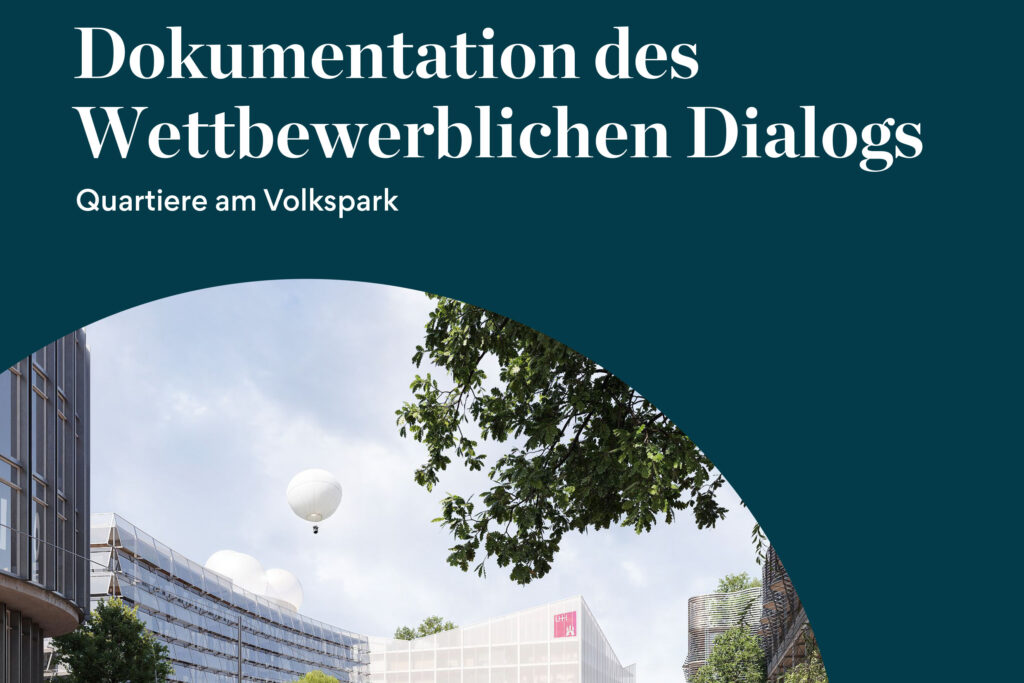
The Cobe planning team impressed the selection committee with the highest planning quality, innovative strength and sustainable concepts. The urban design and open spaces offer a high degree of flexibility, orientation and identity for the entire area. Three sub-areas have their own distinct character and yet visibly belong together.
In "Campusviertel", a system of urban squares and public functions underlines the urban character. Close to Campus West on the opposite side of Luruper Chaussee , further buildings of the University of Hamburg, including a lecture hall center, are to be located for research and learning. One of the two entrances to the new underground S-Bahn station is also planned close to the university facilities. But people also live and work in the "Campusviertel".
The basic idea of the adjacent "new garden city" to the east is linear, open residential block structures that create green courtyards and thus strengthen the neighborhood character. To the east of the future cover over the A 7, surrounded by the landscape axis Volkspark, lies the "Naturquartier". Here, the design envisages a loose, intermixed block structure that allows nature to repeatedly penetrate the spaces in between.
As the main element of the open space planning, a "green corridor" connects the sub-districts with each other, but also with the eponymous Volkspark Altona and the other surrounding green spaces. The "green corridor" fulfills many functions: for example, it absorbs rainwater, is a green landscape and a place of leisure. It also integrates part of the sports areas. Roof and façade greening of the buildings is also planned to complement the green character of the quarters at Volkspark .
Science and learning are the common thread running through all subspaces. The planned departments of the University of Hamburg (e.g. for chemistry) characterize the "Campusviertel". The schools also planned for the quarters at Volkspark as well as additional learning locations will be integrated into the ribbon as the project progresses.
The development concept provides for the neighborhood to be largely free of motorized traffic. There are plans for Mobility Hubs near the entrances to the neighborhood. In addition to the S-Bahn station, stops complement the public transport services. The principle applies: the most sustainable means of transportation is always the quickest to reach.
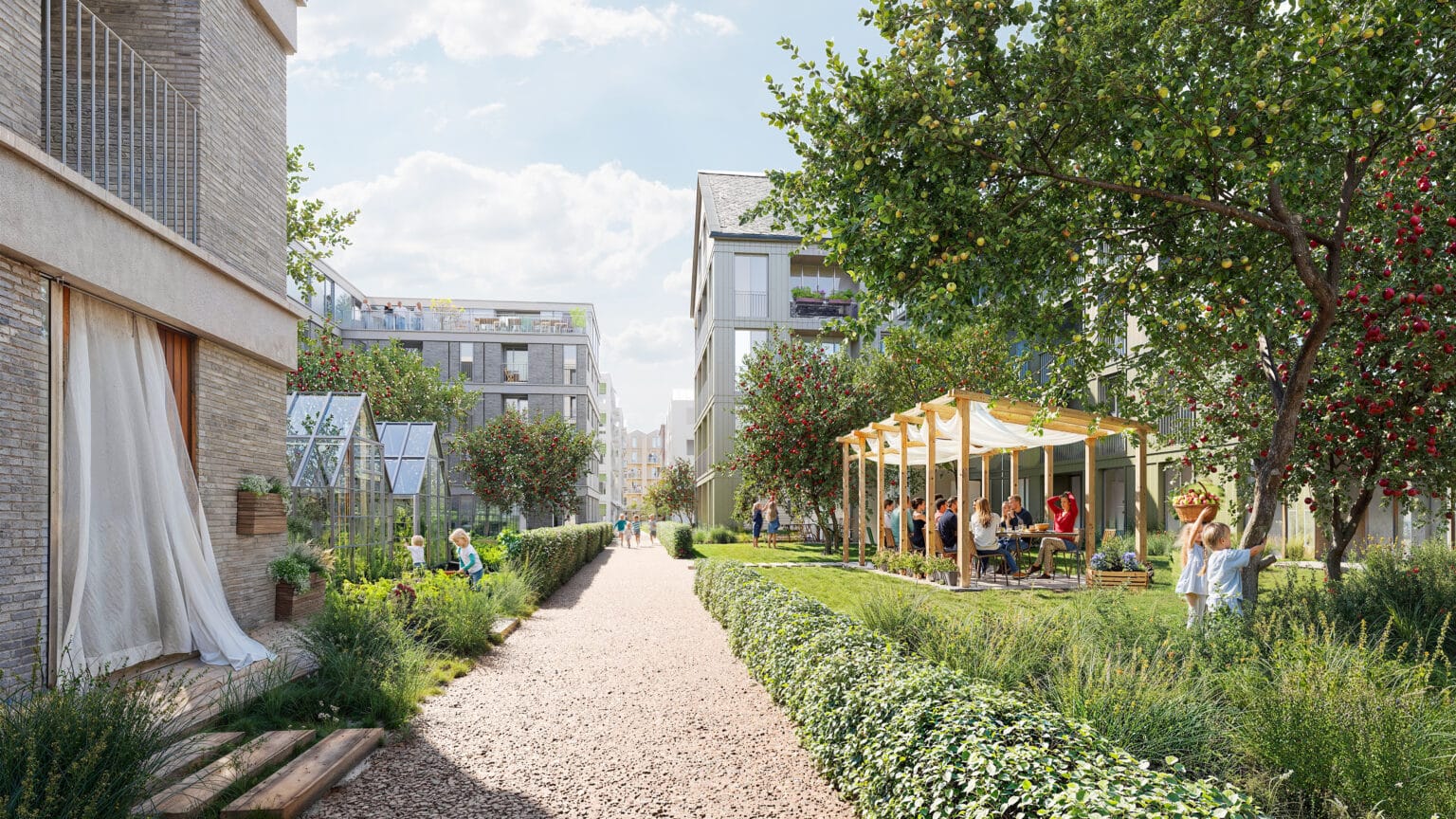
Visualization: COBE
"Breakthrough for the Science City"
"Cobe's outstanding design is a breakthrough for Science City. It underlines the impressive urban planning dimensions of this unique future project in the west of Hamburg," emphasizes Hamburg's Senator for Urban Development and Housing. Dr. Andreas Kleinau, Chairman of the Management Board of Science City Hamburg Bahrenfeld GmbH, adds: "On this basis, we can move swiftly into functional planning in order to turn plans into built reality as quickly as possible."
Next steps
The design from COBE A/S serves as the basis for the subsequent functional planning, which leads to the development plans. Only then can the area be realized in construction phases from west to east. Completion of the functional planning is scheduled for the end of 2026. The first construction activities are expected from 2027/2028.
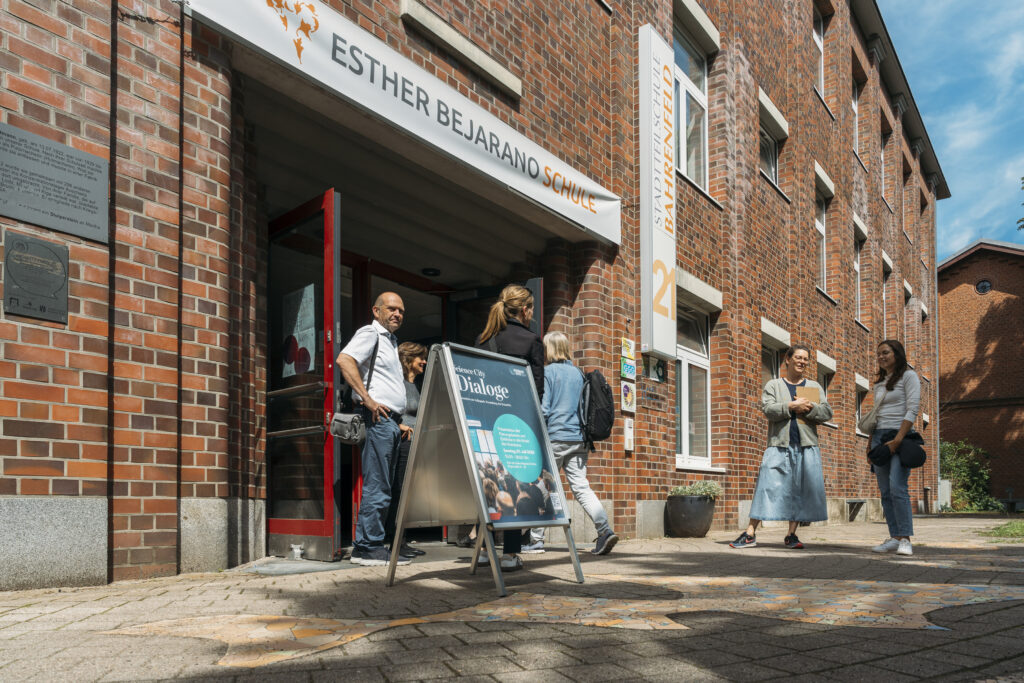
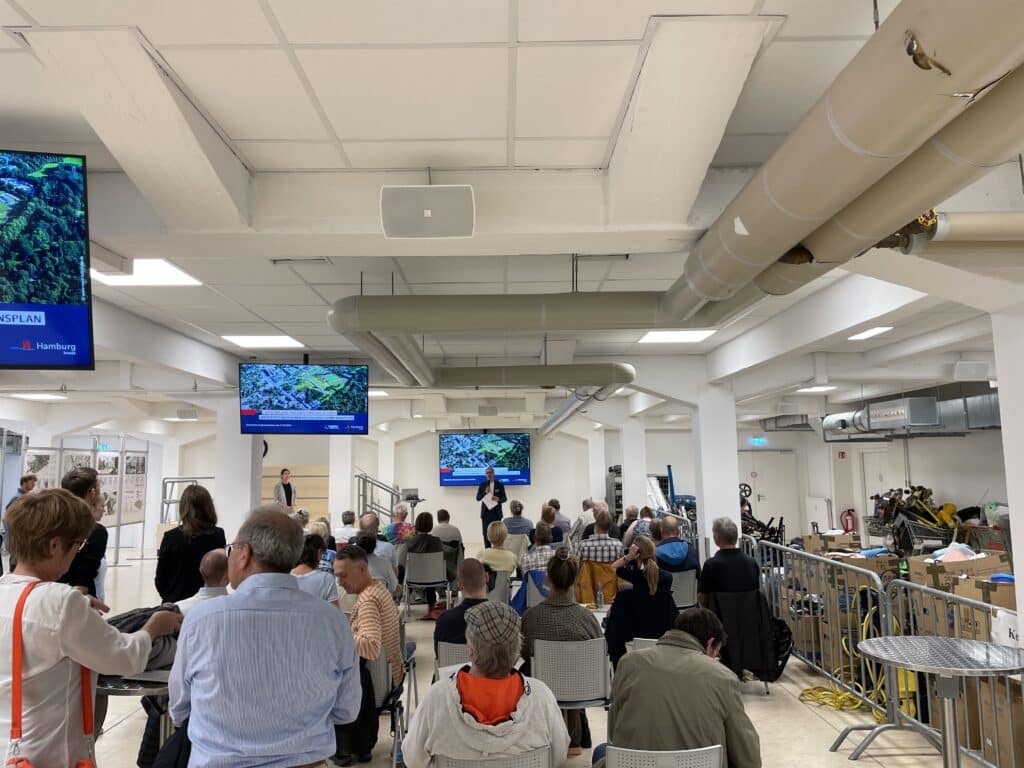
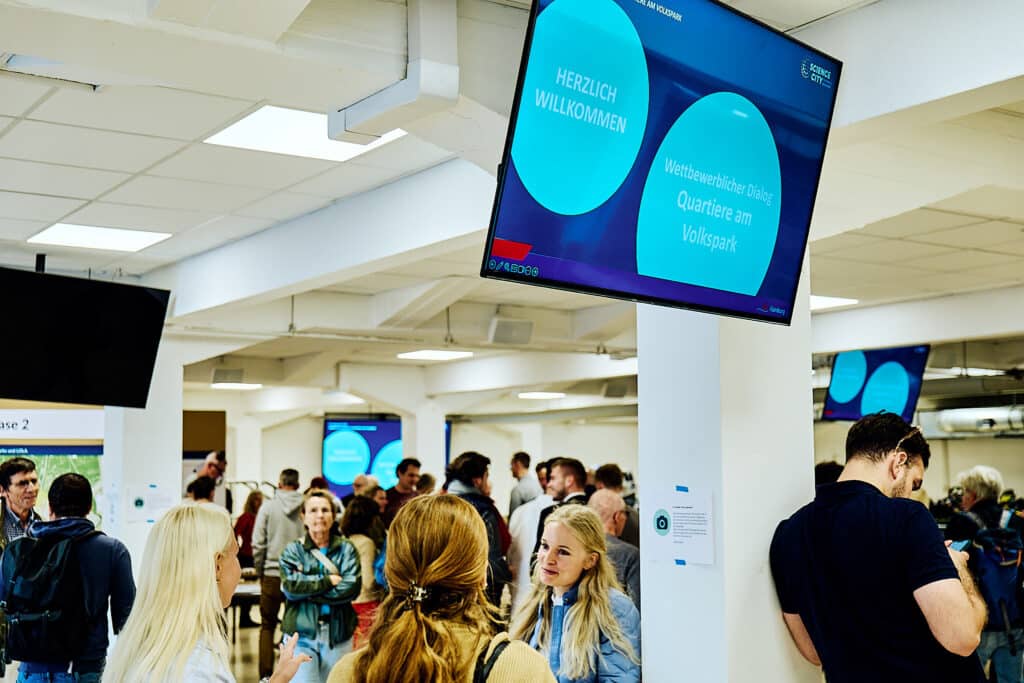
Dialogue event with presentation of the winning design:
September 19, 2024, 6 p.m., Central Lost and Found Office, Luruper Chaussee 125, 22761 Hamburg, admission free
Exhibition of the competition entries:
September 20 to 28, 2024: Infocenter Science City Hamburg Bahrenfeld, Albert-Einstein-Ring 8-10, 22761 Hamburg, admission free