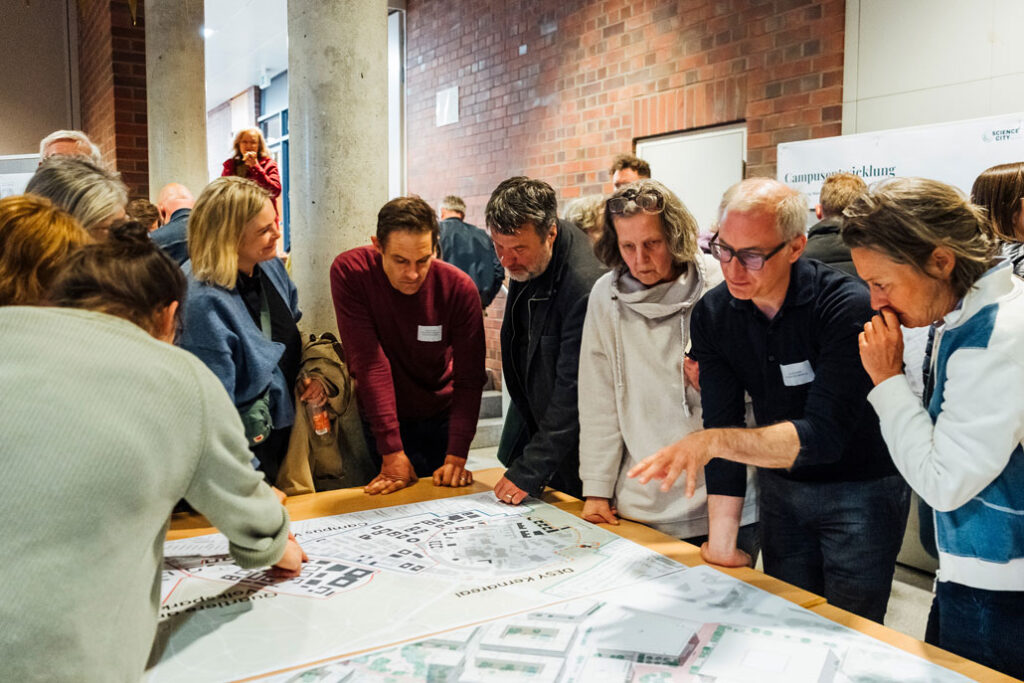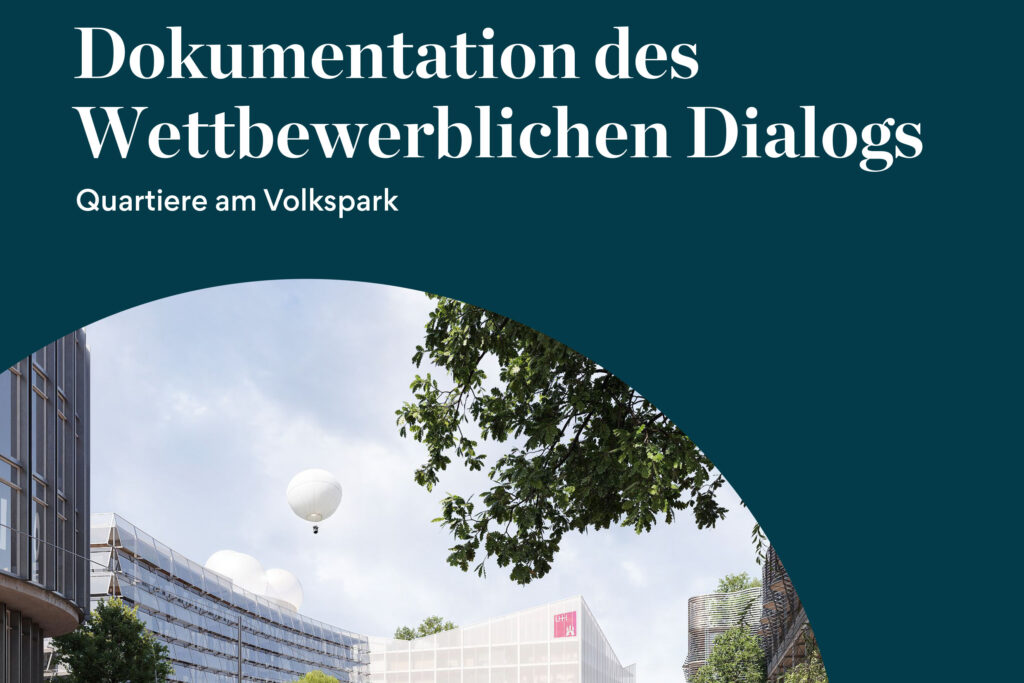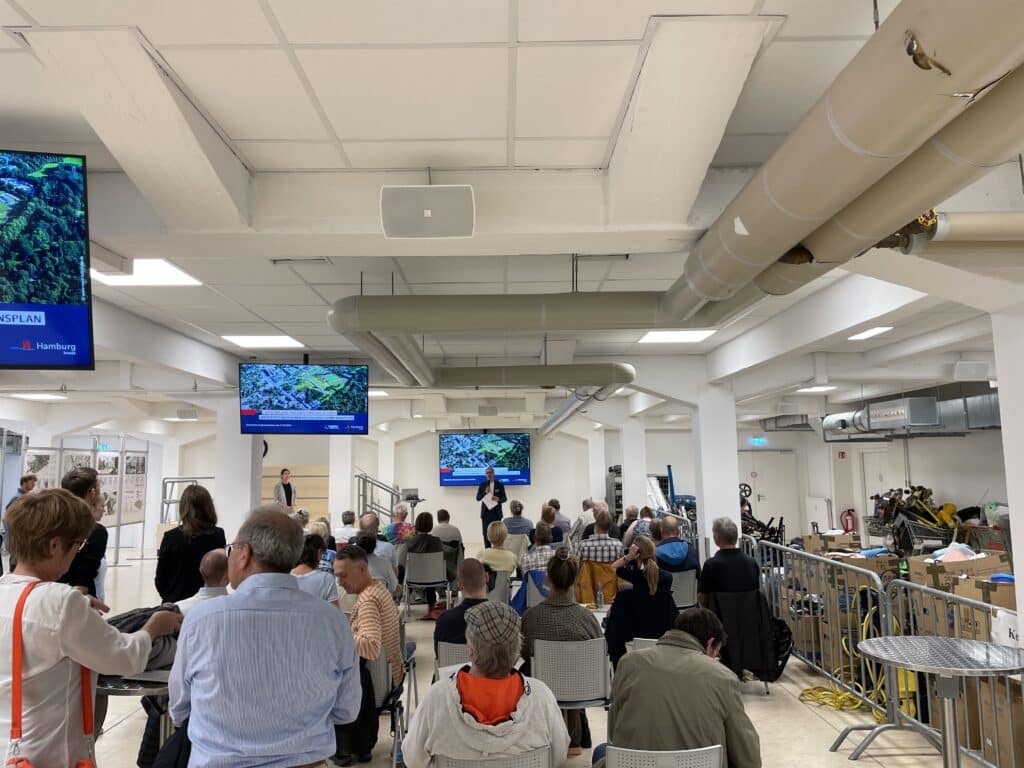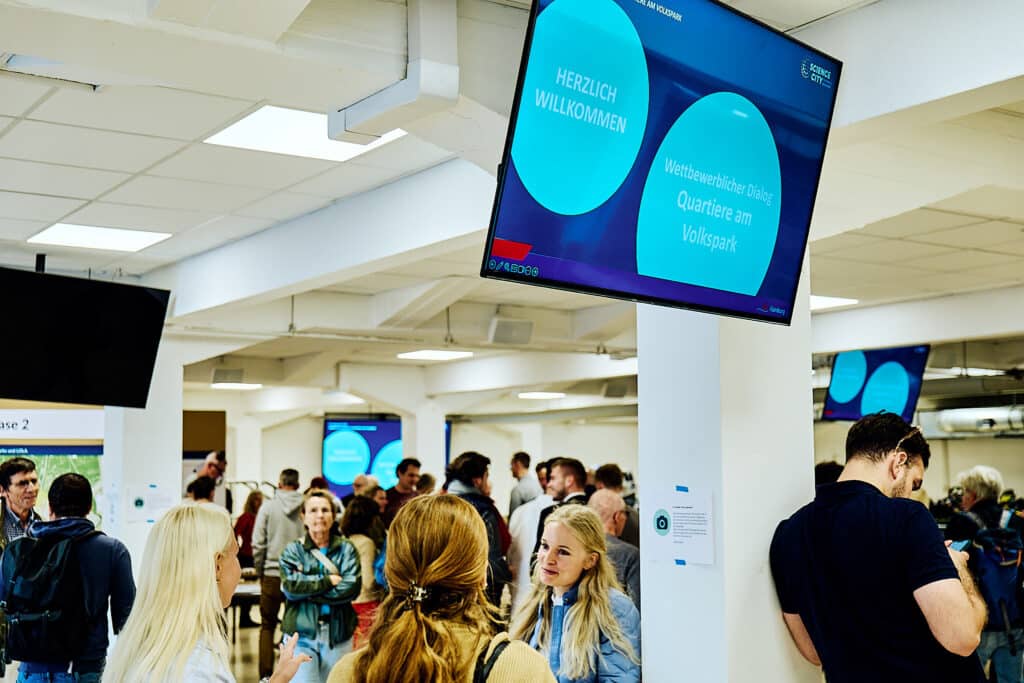

The Campus West forms the scientific core of the Science City Hamburg Bahrenfeld. Located between Luruper Chaussee and Notkestraße , it forms the scientific core of Science City Hamburg Bahrenfeld together with the research center DESY and the facilities of the University of Hamburg as well as other institutes such as the Max Planck Institute for the Structure and Dynamics of Matter. The vision for the future has now been fleshed out in an urban development framework plan. In addition to the structural perspective for the scientific locations, the plan structures the overall development into an attractive campus with recognition value, good orientation and the connection to the neighborhood.
The master plan for Campus West was commissioned by the Free and Hanseatic City of Hamburg and developed by Science City Hamburg Bahrenfeld GmbH in close cooperation with the Ministry of Urban Development and Housing, the Ministry of Science, Research, Equality and Districts, the District Office Altona, the University of Hamburg, the Research Center DESY and the Max Planck Society.
Framework for current and future construction projects
The Campus West continues to develop dynamically. Current projects include the new building HAFUN of the University of Hamburg (Hamburg Fundamental Interactions Laboratory), the visitor center DESYUM and the DESY Innovation Factory I. In the future, the development of the DESY large-scale research facility PETRA IV will be added. With the framework plan Campus West , the stakeholders involved have coordinated the long-term urban and open space planning structure. This includes, for example, the overarching spatial qualities, design principles and the definition of potential areas for future research buildings.
Linking and Opening
Specifically, the “ Campus West ” framework plan focuses on four goals: connecting public spaces and opening them up to the neighborhood, developing a biodiverse campus, implementing a clear urban restructuring, and promoting the site as a hub for innovation by creating favorable conditions for research and exchange. For example, detailed agreements were reached regarding the fundamentals of infrastructure development and the character of open spaces. Nevertheless, the master plan is designed to be flexible enough to adapt to changing conditions. Short-term projects or other changes can thus be seamlessly integrated as integral components of campus planning to further strengthen Science City.
Science Senator Katharina Fegebank: " Science City Hamburg Bahrenfeld is a unique future-oriented project in Europe and is taking shape every day. The Campus West in particular is experiencing a unique dynamic with the new research building HAFUN, the new visitor center DESYUM and, in the future, the major project PETRA IV . The framework plan Campus West provides the right compass for this: it stands for the sustainable linking of science and city life, for networking and open space for innovation. A pioneering plan for the future of Science City."
Dr. Andreas Kleinau, Managing Director of Science City Hamburg Bahrenfeld: "With the framework plan Campus West , we are taking a decisive step in the overall project Science City Hamburg Bahrenfeld - one of the central locations for Hamburg's future."
Dipl.-Ing. Franz-Josef Höing, Senior Building Director of the Department of Urban Development and Housing: "The framework plan creates the basis for an urban and lively urban space in Science City in close cooperation between science and urban development. In future, we will offer researchers, students and visitors the best conditions for working, researching, learning, exchanging ideas and spending time here."